Your cart is currently empty!
Starting Your Cybersecurity Business: Essential Strategies for Success
For IT consultants ready to go independent, security-minded MSPs, and career switchers with hands-on tech experience, the demand for cybersecurity entrepreneurs has never felt more immediate. The cybersecurity industry overview is clear: attacks keep coming, but trust is hard to earn and easy to lose. New cybersecurity business owners quickly run into real cybersecurity startup challenges, proving credibility, defining a clear offer, and turning risk into a service clients understand. The upside is that cybersecurity business opportunities are expanding wherever organizations need practical protection, clear communication, and dependable delivery.
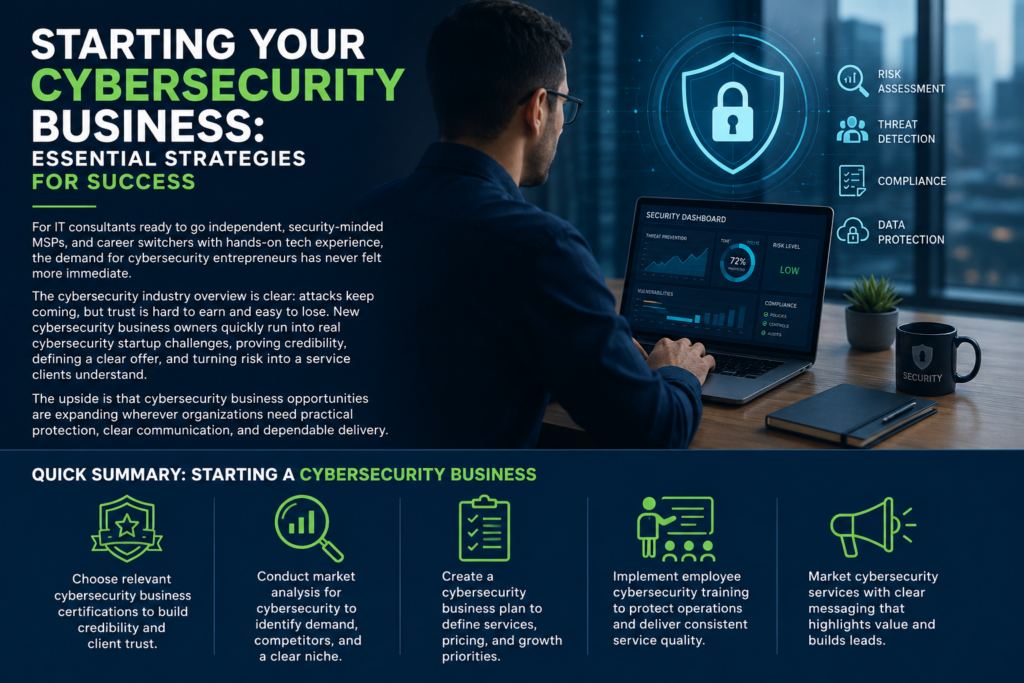
Quick Summary: Starting a Cybersecurity Business
- Choose relevant cybersecurity business certifications to build credibility and client trust.
- Conduct market analysis for cybersecurity to identify demand, competitors, and a clear niche.
- Create a cybersecurity business plan to define services, pricing, and growth priorities.
- Implement employee cybersecurity training to protect operations and deliver consistent service quality.
- Market cybersecurity services with clear messaging that highlights value and builds leads.
Understanding the Building Blocks of a Cybersecurity Firm
A successful cybersecurity business rests on a few basics you can choose on purpose, not guess at. That means picking the right legal business structure, stacking credible certifications, meeting industry standards compliance, and clearly positioning what you do and who you do it for.
This foundation keeps you from selling “security” as a vague promise. It helps you price with confidence, win trust faster, and narrow to a service niche that matches real demand like email and user defense, especially when 94% of businesses experienced phishing attacks in 2024.
Think of it like opening a clinic. You need the right licenses, proven training, and a clear specialty before patients book. The same is true when the cybersecurity certification market size is growing and buyers compare providers quickly. With the fundamentals set, the LLC steps and compliance rhythm become much easier to manage.
Simplify Your LLC Setup and Stay Compliant as You Grow
Once you’ve mapped out your legal setup and core requirements, the next challenge is keeping the admin work from stealing time from billable security work. An all-in-one platform can help you start, run, and grow your business by bringing key tasks and guidance into one place, so you’re not juggling scattered tools or missing critical deadlines. With ZenBusiness, you can get help that’s designed to keep you supported as you build, so formation and ongoing obligations feel manageable instead of overwhelming. Whether you’re forming an LLC, managing compliance, creating a website, or handling finances, this type of platform can provide comprehensive services and expert support to ensure business success.
Launch Your Cybersecurity Services in 5 Clear Steps
This process helps you go from “I’m ready to do security work” to “I can legally sell it, deliver it, and invoice for it.” For general readers, it keeps you focused on a few decisions that reduce risk and make you look credible to your first clients.
- Choose one service niche you can explain in one sentence
Start with a narrow offer like phishing awareness training, small business security checkups, cloud configuration reviews, or incident response readiness. Pick the niche where you can quickly show outcomes, such as fewer risky settings or clearer action lists, because clarity sells better than a long menu. If you are unsure demand exists, remember that organizations reported a rise in cybersecurity risks, which means many buyers are actively looking for help. - Confirm your “sell-ready” requirements checklist
Write down what you need before taking money: a business name, a basic contract or statement of work, a business bank account plan, and a simple privacy and data handling policy. If you will touch sensitive systems, add professional liability coverage and a secure way to store client notes. This step protects you from awkward delays when a prospect asks, “Can you start next week?” - Take the fastest formation route that fits your risk level
Choose a business structure and complete the formation steps so you can sign agreements and separate personal and business finances. Keep it simple: form, get your tax setup sorted, and create a clean paper trail for payments and expenses using business formation steps. Speed matters because “almost ready” does not get you booked. - Build a repeatable delivery workflow before you market
Turn your niche into a basic playbook: intake questions, a kickoff call agenda, the steps you run each time, and the format of the final deliverable. Add a lightweight checklist for security hygiene on your own side, like device updates and password manager use, so you model the behavior you recommend. Operational consistency is what makes early clients comfortable. - Set up invoicing and proof of completion on day one
Choose an invoicing method, define payment terms, and decide what triggers the invoice, such as project kickoff, milestone delivery, or completion. Many teams use e-invoicing because it can speed up time to payment, which helps cash flow when you are new. Pair every invoice with a simple “what was delivered” summary so clients can approve and pay quickly.
Cybersecurity Business FAQs New Founders Ask
Q: How should I price my first cybersecurity service?
A: Start with a fixed “starter package” so buyers can say yes without guesswork. Price it from your time estimate plus reporting, follow ups, and a buffer for surprises, then keep the scope tight. After 3 to 5 projects, adjust using your real delivery hours.
Q: How do I get my first clients if I have no portfolio yet?
A: Begin with your warm network and ask for one specific intro to a business owner who matches your niche. Offer a low risk first engagement like a 60 minute assessment call with a short action list. Turn every win into a one page anonymized case summary with before and after outcomes.
Q: What if the market feels crowded and I am worried no one will hire me?
A: Demand is expanding, and the cybersecurity market size is projected to keep growing through 2030. You do not have to compete with big firms if you focus on a narrow buyer and one repeatable deliverable. Pick an underserved segment like local professional services, small SaaS teams, or nonprofits.
Q: When should I use contracts, insurance, and a formal business setup?
A: Use a simple agreement before you touch systems or accept payment, even for small jobs. If you will access sensitive data, get professional liability coverage and define how you store notes and evidence. Make it a rule that you never start work without signed scope and payment terms.
Q: How do I handle tough clients or unrealistic security expectations?
A: Set expectations early with a written scope, assumptions, and what “done” looks like. If someone wants “perfect security,” reframe it as risk reduction with measurable checkpoints and dates. When scope creeps, offer two options: a change order or a trimmed deliverable.
Turn Cybersecurity Expertise Into a Focused Business Launch
Starting a cybersecurity firm can feel like a tug-of-war between big risks and the need to look credible fast, especially when pricing and first clients still feel uncertain. The path to cybersecurity business success is rarely about knowing everything; it’s about choosing a clear position, staying consistent, and treating each decision as part of a repeatable business system; those key business takeaways are what builds real startup confidence building. Applied with steady entrepreneur motivation, that approach turns doubt into momentum and keeps a launching cybersecurity venture from stalling at the planning stage. Clarity creates clients, and consistency creates a business. Choose one next step today, define an offer, start formation, or map a simple marketing plan. That small commitment matters because it builds resilience and steady growth long after the first win.
Author: Cody McBride
by
Tags: